



























Many people have heard the old saying that dogs can only see in black and white. It sounds convincing, but science tells us something much more interesting.
Dogs can see colors. They simply experience a smaller range of colors than humans do. At the same time, canine eyes have other advantages, especially when it comes to detecting movement and seeing in dim light.
So, what does the world actually look like to your dog?
What Colors Can Dogs See?
Humans normally have three types of cone cells in the retina, allowing us to perceive a wide range of colors. Dogs have two main types of cones, giving them what scientists call dichromatic vision.
A classic study published in Visual Neuroscience found that dogs have two classes of cone photopigments, confirming that canine color vision is dichromatic.
In simple terms, dogs are best at seeing blue and yellow. Reds, greens, and oranges are more difficult for them to distinguish.
For example:
| Human Color | How It May Appear to Dogs |
|---|---|
| Blue | Blue |
| Yellow | Yellow |
| Red | Brownish or dark gray |
| Green | Yellowish or gray |
| Orange | Yellowish-brown |
| Purple | Similar to blue |
Veterinarians at VCA Animal Hospitals explain that normal canine color vision is somewhat similar to red-green color blindness in humans.
Learn more about dog color vision from VCA Animal Hospitals
Why Can a Dog Miss a Red Ball on Green Grass?
Imagine throwing a bright red ball onto a green lawn.
To you, the contrast is obvious. But because dogs do not distinguish red and green as clearly as humans do, that red ball may blend into the grass more than you expect.
That is why your dog can occasionally run right past a toy that seems incredibly obvious to you.
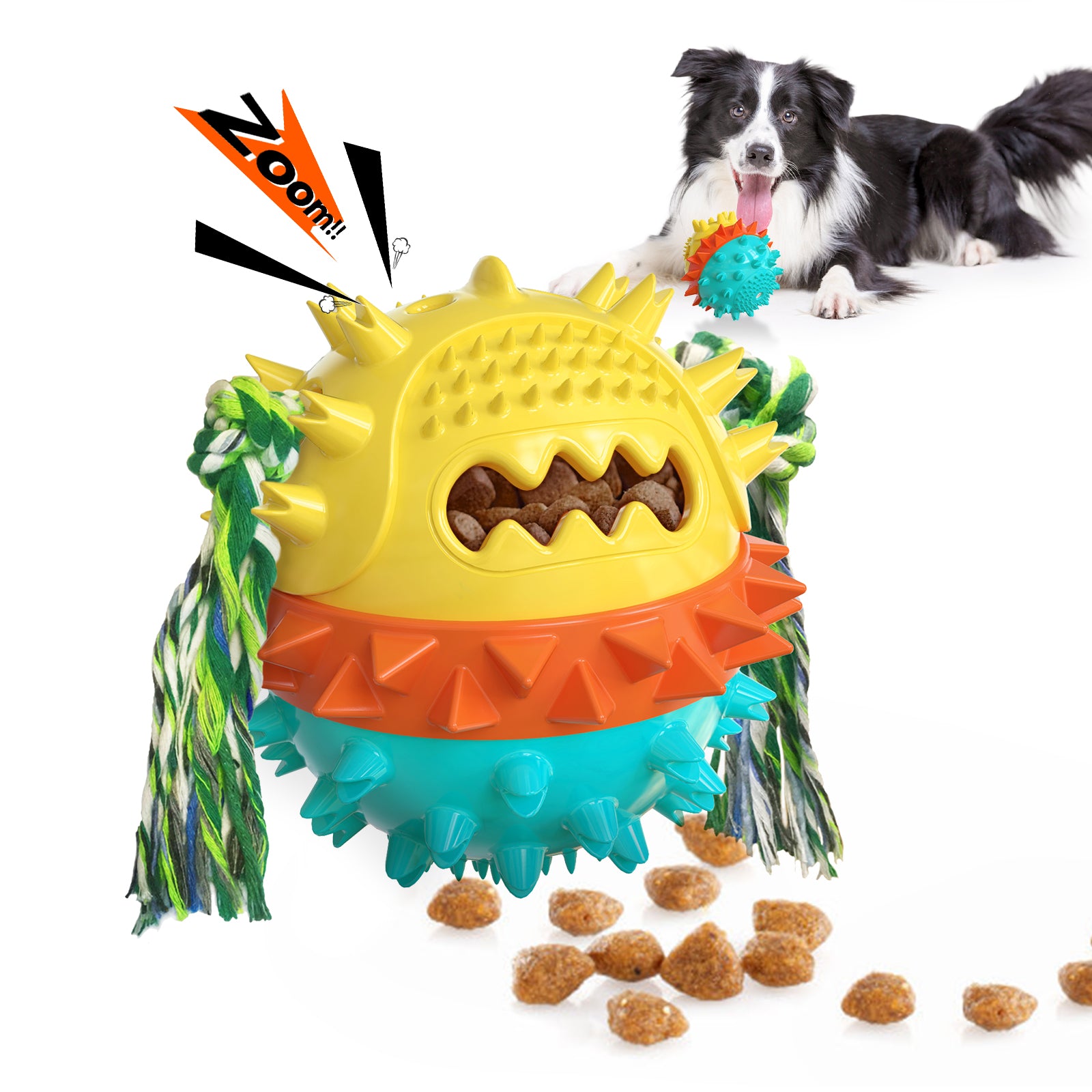
If visibility is important, blue and yellow toys are often easier for dogs to visually identify, especially outdoors.
Of course, color is only one factor. Dogs also choose toys based on movement, smell, texture, sound, size, and—perhaps most importantly—whether their favorite human is playing with them.
Dogs Have Other Visual Advantages
Seeing fewer colors does not mean dogs simply have “worse” vision.
Their eyes are adapted differently.
Dogs have more rod cells in their retinas than humans, which helps them detect movement and function in lower-light conditions. They also have a reflective structure behind the retina called the tapetum lucidum.
This structure reflects light back through the retina, improving the eye's ability to use limited light. It is also one reason a dog's eyes may appear to glow when illuminated at night. VCA notes that dogs generally see better than humans in dim conditions and are especially good at detecting movement.
This ability is useful around dawn, dusk, and during evening walks.
However, there is an important difference between your dog being able to see and other people being able to see your dog.
For evening walks, adding a visible light to a collar or harness can help make a dog easier to notice around roads, parks, and dark trails. The PawView Pet Anti-Lost LED Light with Protective Case, for example, combines an LED safety light with a QR-code pet ID holder and offers fast flash, slow flash, and steady-light modes.
See the PawView Pet Safety LED Light
Dogs Experience the World Through More Than Sight
Although vision matters, your dog's nose may provide much more information about the environment.
When humans enter a park, we notice the trees, people, flowers, and landscape.
A dog may notice something completely different.
Who walked here earlier?
Was another dog nearby?
Did a squirrel pass through?
Is there an unfamiliar animal somewhere close?
Much of this information comes from scent.
That is why dogs often stop repeatedly during walks to sniff trees, grass, poles, and other objects. What looks like “doing nothing” to us can actually be active environmental exploration.
The American Kennel Club describes sniff-focused walks as a form of mental enrichment that allows dogs to gather information and engage in natural behaviors.
Read more about the benefits of sniff walks from the AKC
So the next time your dog stops to investigate the same patch of grass for 20 seconds, there may be no need to immediately rush them forward.
Sometimes, sniffing is part of the walk.
Vision Is Only One Part of Pet Safety
Dogs may see well in low light and notice movement quickly, but even a well-trained dog can become separated from its owner because of an open gate, sudden noise, wildlife, or an unexpected distraction.
That is why basic identification is still valuable.
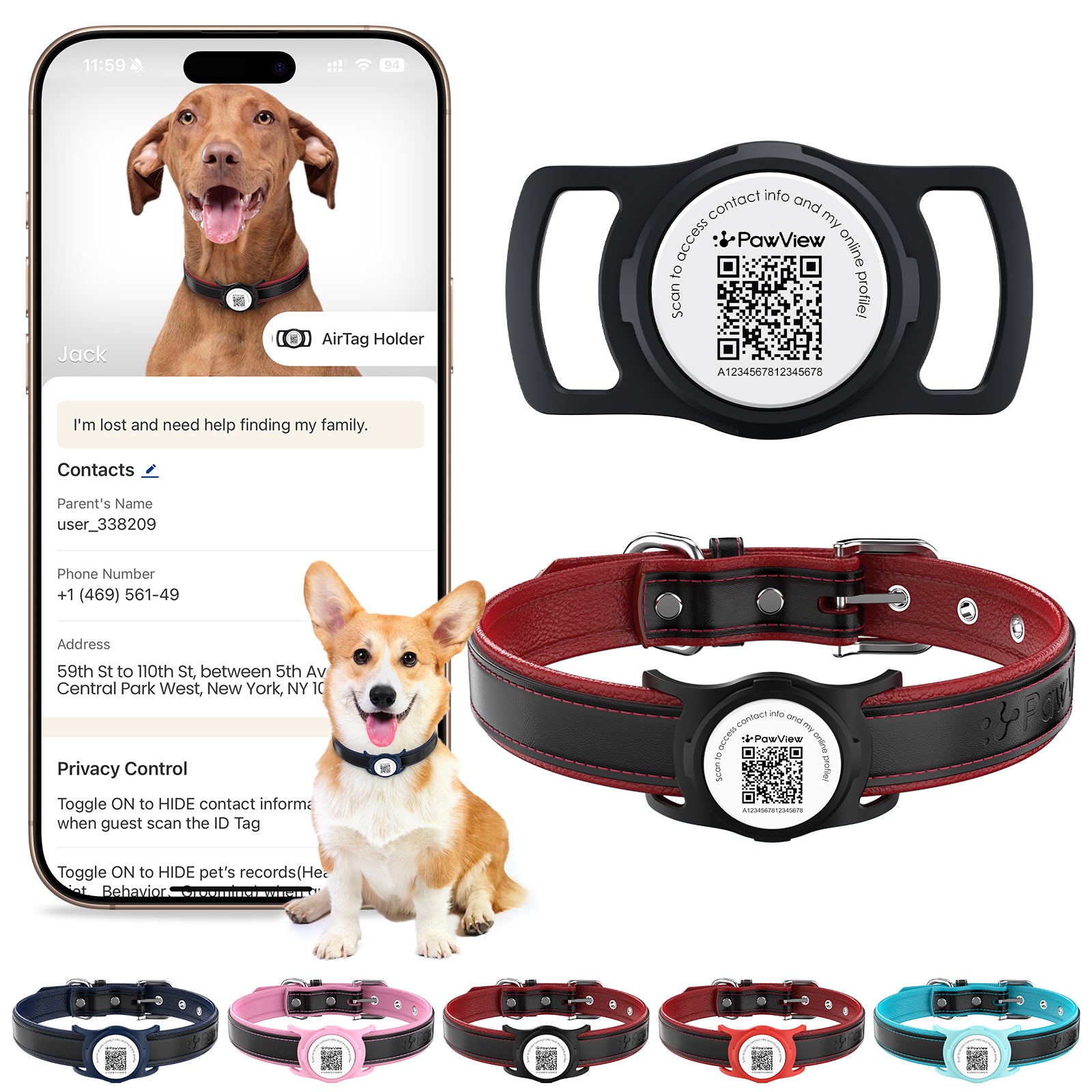
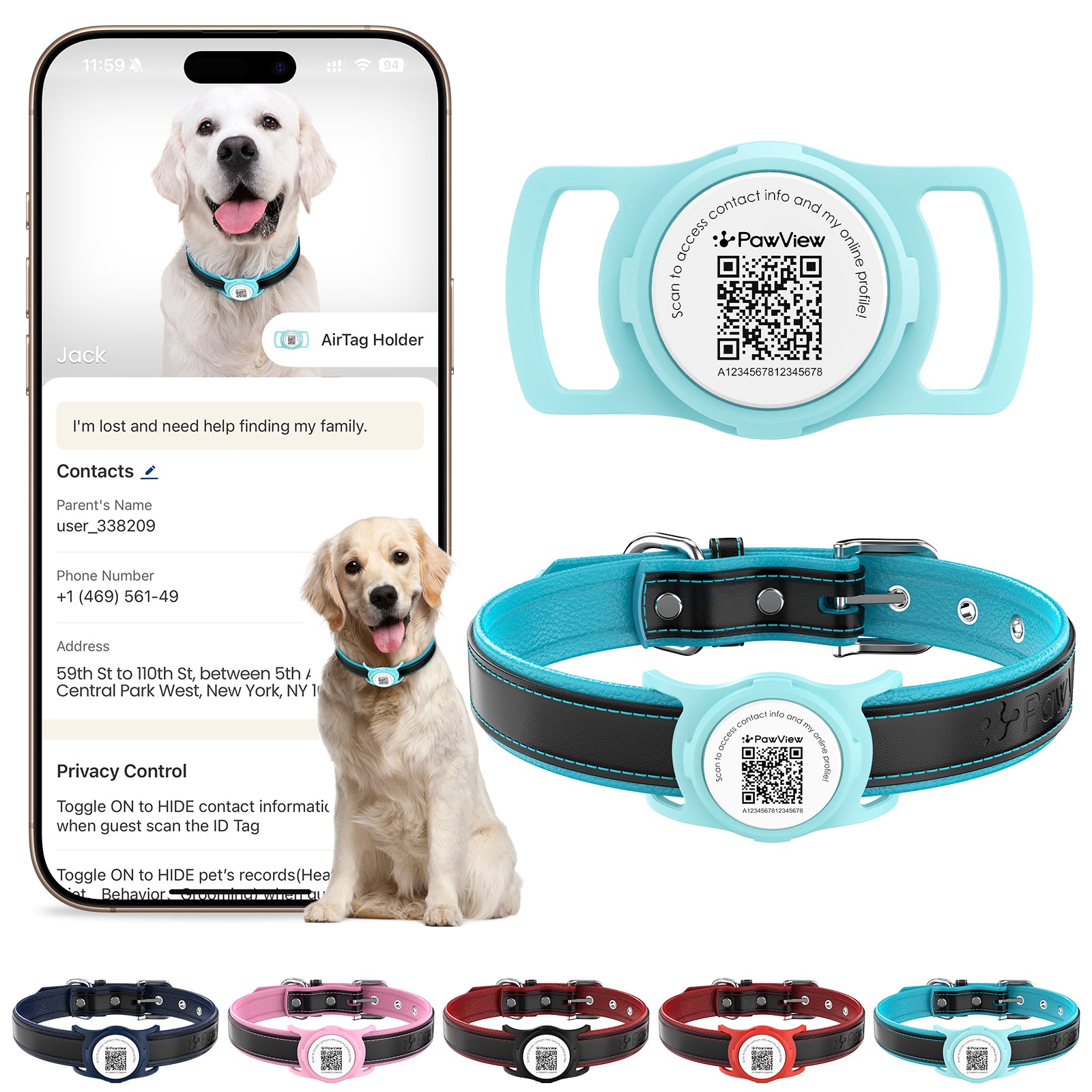
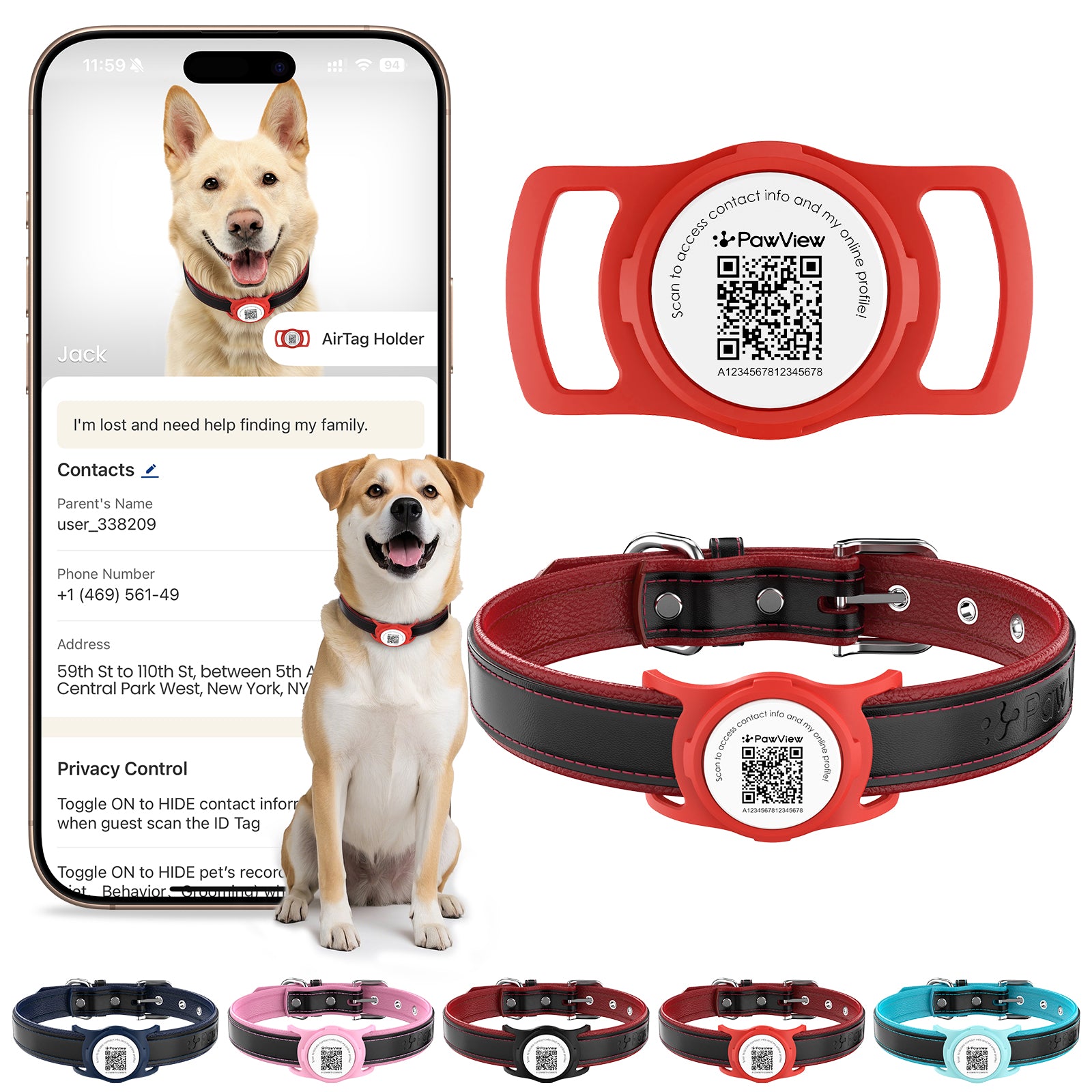
For example, a PawView QR & NFC Smart Pet ID Tag connects a physical tag with a digital pet profile, allowing contact information to be updated without replacing the tag itself.
Explore PawView Smart Pet ID Tags
Identification does not replace responsible supervision or leash safety. It simply creates another way for someone to identify a lost pet and contact its owner.
Dogs Don't See a Smaller World—Just a Different One
Humans experience a world rich in color and fine visual detail.
Dogs experience that same world through a different combination of blue and yellow color vision, motion detection, low-light vision, scent, and sound.
When you walk through a park, you may see green grass, colorful flowers, and sunlight.
Your dog may experience that same park as layers of scent, moving animals, distant sounds, familiar trails, and visual cues you barely notice.
You are standing in the same place.
But you are experiencing two very different worlds.
And perhaps that is one of the most fascinating things about living with a dog.


