







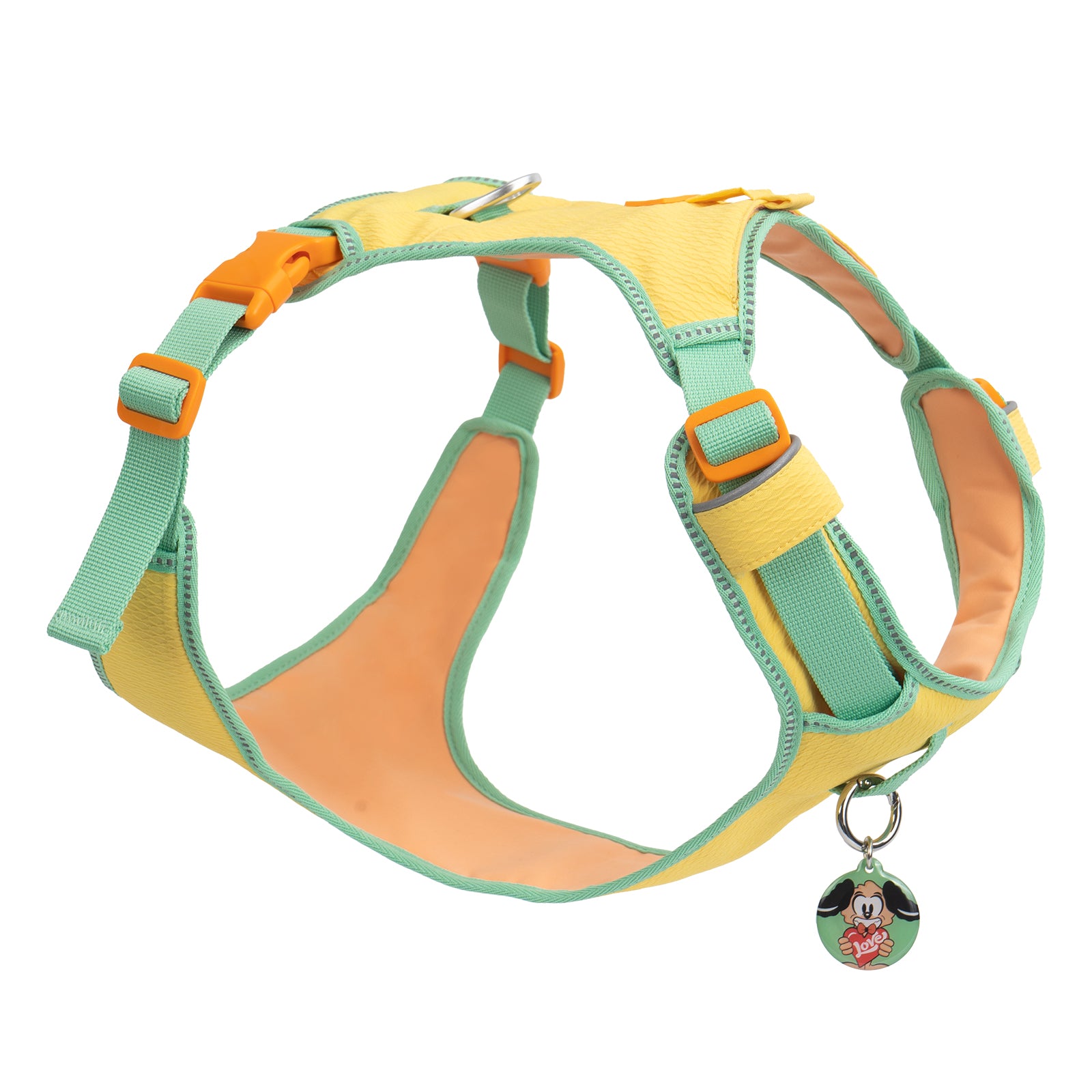
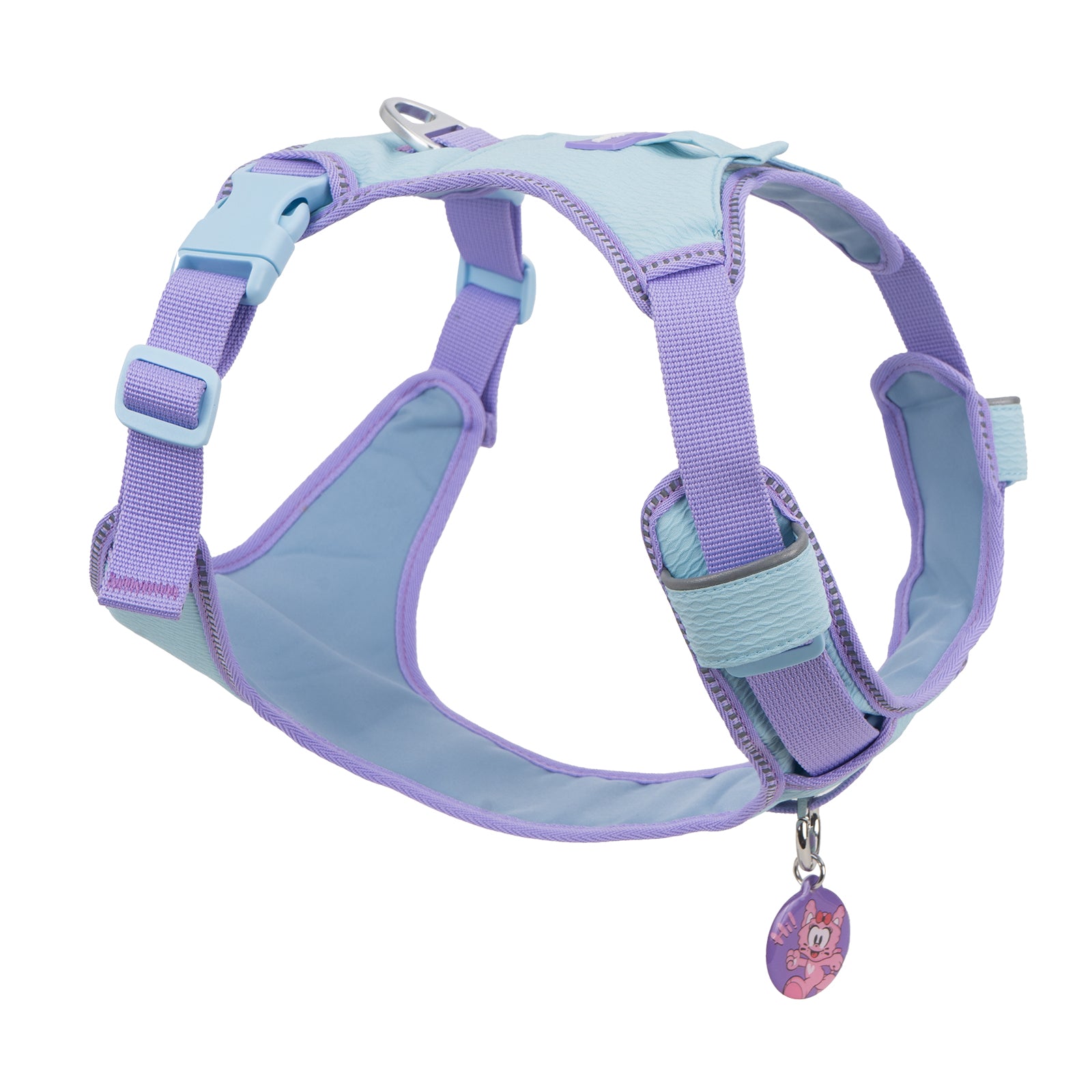



A dog harness should feel secure without being restrictive. If it is too loose, your dog may be able to back out of it. If it is too tight, it can rub the skin, restrict movement, and make walks uncomfortable.
That is why learning how a dog harness should fit is just as important as choosing the right style. Proper fit starts with accurate measurements, careful adjustment, and regular checks as your dog grows or changes weight.
1. Measure Your Dog Before Choosing a Size
Do not choose a harness based only on breed or weight. Two dogs of the same breed can have very different body shapes.
For most harnesses, the most important measurement is chest girth.
Have your dog stand naturally and wrap a soft measuring tape around the widest part of the rib cage, usually just behind the front legs. PetMD recommends measuring the widest part of the chest because girth is one of the key measurements used when fitting dog gear.
You may also need to measure around the lower neck, where the neck meets the shoulders.
Always compare your measurements with the manufacturer's dog harness size guide. A “medium” from one brand may fit very differently from a medium made by another.
PawView's harness collection, for example, includes several different harness structures, so checking the sizing chart for the specific design matters more than choosing by breed alone.
2. Use the Two-Finger Rule as a Starting Point
Once the harness is on your dog, it should sit close to the body without pinching.
A useful starting point is the two-finger rule: you should generally be able to slide about two fingers between the straps and your dog's body.
The American Kennel Club also emphasizes the importance of measuring chest girth and leaving enough room for comfortable movement when fitting dog gear.
AKC: The Ultimate Dog Apparel Measuring Guide
However, the two-finger rule is only a starting point. Coat thickness, body shape, and harness construction can all affect how a harness fits.
For dogs that benefit from lighter equipment, the PawView Super Light Dog Harness with Smart Pet ID Tag uses an ultra-light design with a back V-ring, multi-purpose front ring, reflective strips, and an ID tag pocket. A lightweight harness still needs to sit securely—the goal is less bulk, not a loose fit. PawView
3. Check the Neck, Chest, and Armpit Areas
After putting the harness on, pay attention to three important areas.
Neck: The harness should sit securely without pressing into the throat.
Chest: The chest panel should remain centered rather than shifting to one side.
Armpits: Straps should not rub directly behind the front legs.
PetMD notes that a properly fitted harness should be snug without causing rubbing or discomfort in sensitive areas.
PetMD: How to Properly Put on a Dog Harness
Let your dog walk for several minutes after fitting the harness. Look for redness, shifting straps, hair pulling, or changes in gait.
Different harness designs can sit differently on the same dog, which is why adjustment matters more than simply choosing the correct labeled size.
4. Make Sure the Shoulders Can Move Naturally
A good harness should support control without interfering with natural movement.
Watch your dog from the side while walking. The front legs should extend freely, and the harness should not pull tightly across the shoulder joint.
The American Kennel Club notes that a well-fitting dog harness should allow normal shoulder extension and should not interfere with a dog's natural gait.
AKC: The Importance of a Well-Fitting Dog Harness
This becomes especially important for active dogs that run, hike, or spend long periods outdoors.
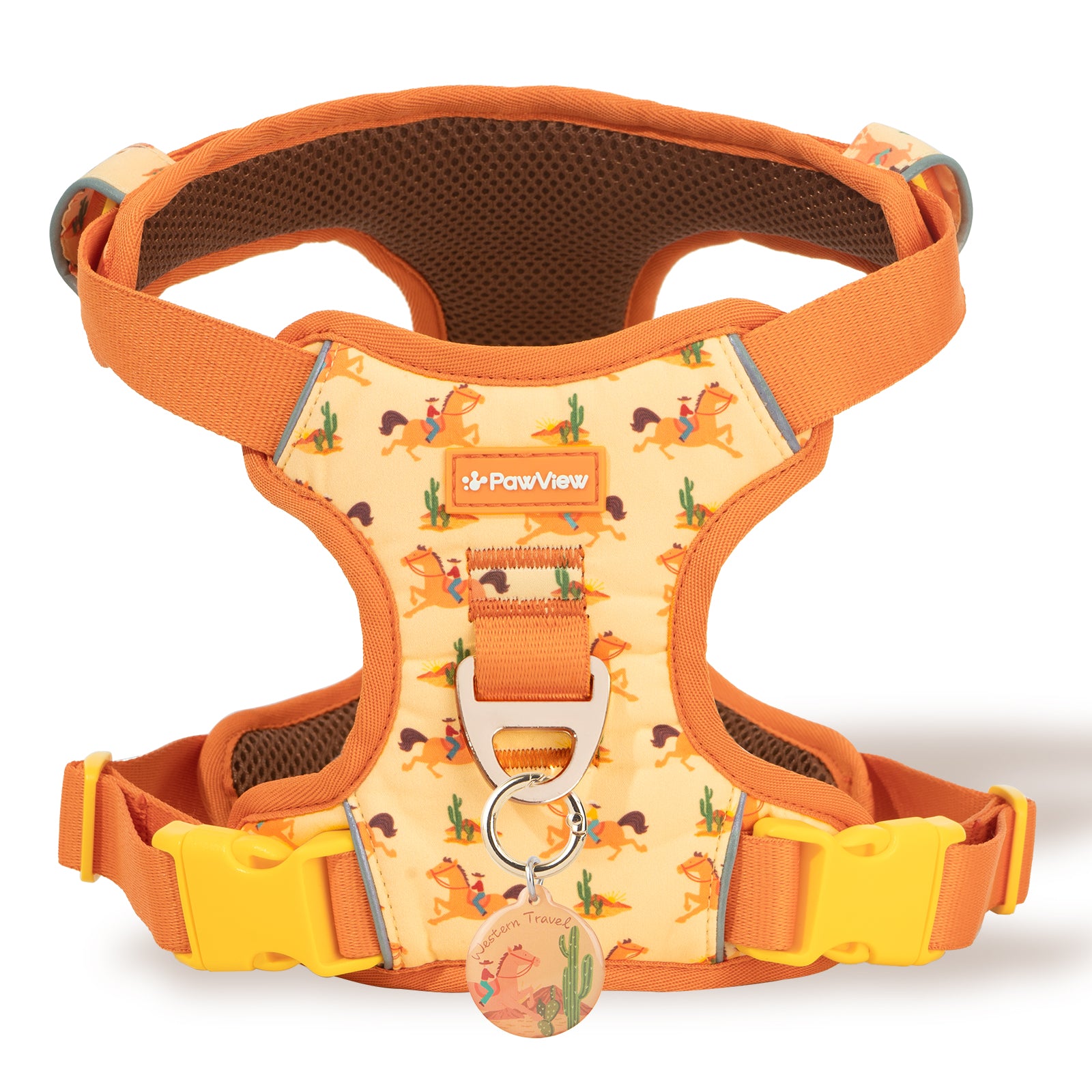
For example, the PawView Western Cowboy Travel Print Series Harness uses four adjustable sliders together with breathable padded air mesh, a back adventure ring, and a front no-pull loop. The multiple adjustment areas make it possible to fine-tune the fit while preserving freedom of movement. PawView
5. Check That Your Dog Cannot Back Out
Comfort is important, but security matters too.
After adjustment, gently check whether the harness can move far enough over your dog's shoulders that they could potentially back out of it.
Do not pull hard or intentionally frighten your dog. Apply only light backward pressure while checking whether the harness remains stable.
If it rotates significantly, slides toward the head, or leaves large gaps around the body, adjust it again.
This check is especially useful for dogs with narrow waists, deep chests, or body proportions that do not fit standard harness shapes easily.
6. Use Adjustment Points Correctly
An adjustable dog harness gives owners more flexibility to fit different body shapes.
Rather than tightening every strap as much as possible, make small adjustments around the neck, chest, and torso until the harness stays centered while your dog walks and turns.
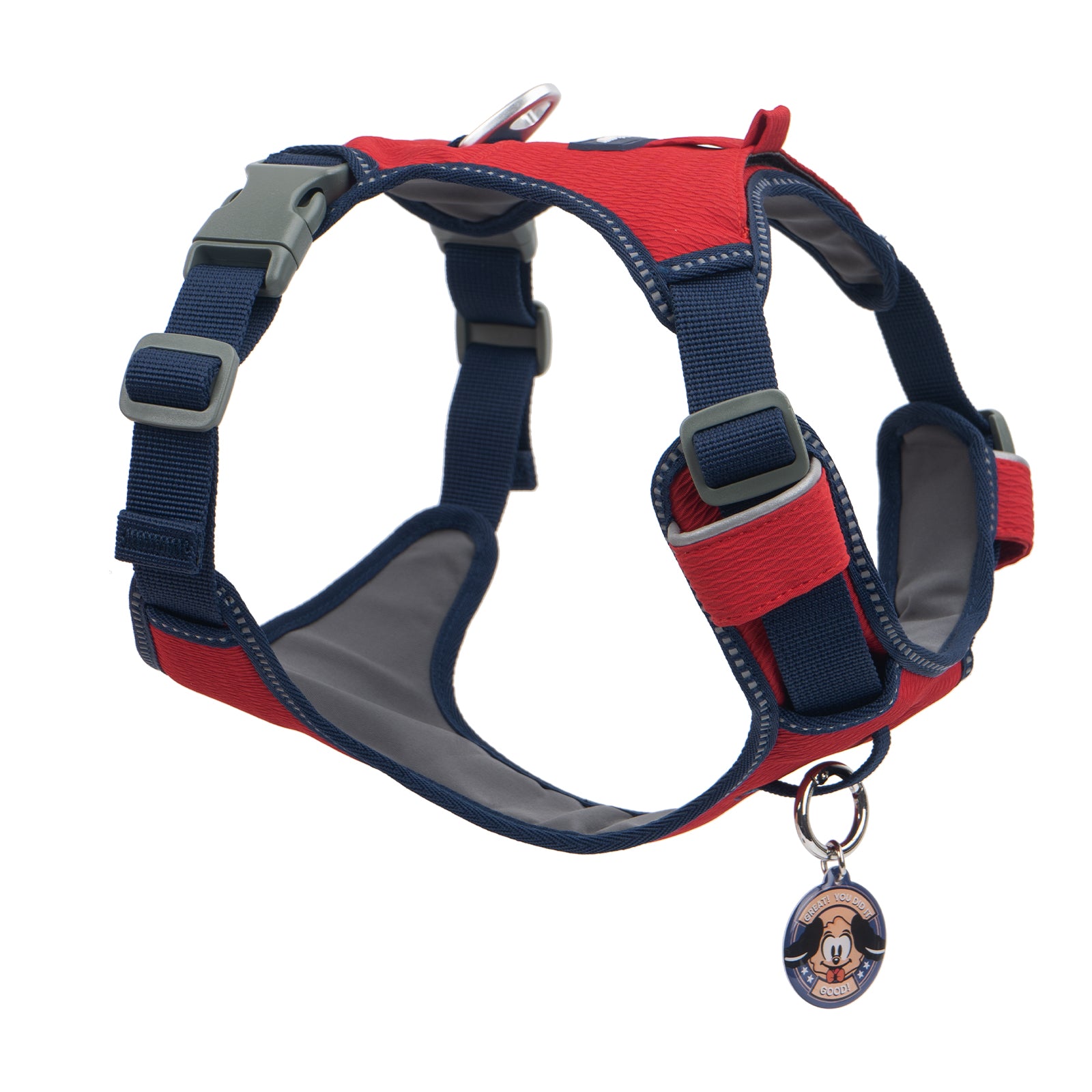
The PawView Adventure No Pull Reflective Harness with Handle uses four adjustment points, along with a No-Pull V-Ring, padded handle, and 360-degree reflective details. This kind of multi-point structure is useful because different areas of the harness can be adjusted independently instead of relying on one overall strap. The model is also available through PawView's current harness collection. PawView
The goal is always the same: stable without being restrictive.
7. Recheck the Fit Regularly
Harness fitting is not a one-time job.
Puppies grow quickly. Adult dogs may gain or lose weight. Long-haired dogs can even fit differently before and after grooming.
Recheck the harness whenever:
- your puppy grows,
- your dog gains or loses weight,
- your dog has recently been groomed,
- straps begin shifting during walks,
- or you notice rubbing or hair loss.
You should also inspect buckles, rings, stitching, and straps for wear.
How Do You Know If a Harness Is Too Tight or Too Loose?
A harness may be too tight if it leaves deep marks, rubs the skin, limits shoulder movement, or makes your dog reluctant to wear it.
It may be too loose if it rotates around the body, hangs away from the chest, or can easily move over the shoulders.
The ideal fit is:
secure, stable, and comfortable.
Your dog should be able to walk, sit, turn, and breathe normally without the harness shifting excessively.
Final Thoughts
So, how should a dog harness fit?
It should be snug enough to remain securely in place, but comfortable enough to allow normal breathing and natural movement.
Measure carefully, follow the specific sizing chart, check sensitive areas for rubbing, and make sure the shoulders can move freely.
Most importantly, choose an adjustable harness that suits your dog's body shape and activity level—and continue checking the fit over time.
A few minutes spent measuring and adjusting can make every walk more comfortable and help you choose the right harness the first time.


